I love to photograph reflections in water. They produce stunning images. A good reflection shot of a beautiful scene is magical every time.
A reflection is: “The throwing back by a body or surface of light, heat, or sound without absorbing it.” It’s a magic that can be perfectly preserved within a digital image, to experience again and again.
There are a few tips for how to photograph reflections in water. The tips to capture refelctions in water are landscape and travel photography basic concepts.
Here’s what you’ll learn about photographing reflections in water:
• Camera Gear for Reflection Photography
• Resarch Good Reflection Locations
• Best Time of Day to Photograph Reflections
• Composition Techniques for Photographing Reflections in Water
• Why a Tripod is Necessary for Reflection Photography

Some of the links on this site are affiliate links, meaning if you book or buy something through one of these links,
we may earn a small commission – at no extra cost to you! Read the full Disclosure Policy.
CAMERA EQUIPMENT TO PHOTOGRAPH REFLECTIONS
We like to use a Camera Gear Checklist of our equipment so we don’t foget anything when heading out to take photos!
Here’s a few of the important things you’ll need photograph reflections in water:
1. Camera: If you’re looking for something new…
→ Check out the compact travel cameras we recommend!
→ Check out these awesome DSLR cameras!
2. Tripod: We are big proponents of using a tripod. There are many compact and lightweight options out there that are easy to use.
→ Check out the tripods we recommend!
3. Lenses: A good prime lens works well for photographing reflections. We find that wider angles work best. For landscapes we use 24mm f/1.4, 50mm f/1.8, and 24-120mm f/4 lenses.
→ Prime lenses for landscape photography.
4. Camera Bag: Protecting your camera from the elements (like sand and dust) is essential. Using a camera backpack is so nice for hiking too.
→ Check out our camera backpack for outdoor photography.
5. Neutral density filter: There can be extreme differences in light outdoors when photographing landscape scenes. To compensate for this variance of light you’ll need to use a neutral density filter.
→ Check out the Kase magnetic filters we use!
6. Camera cleaning kit: You’ll want a field cleaning kit to remove dust or water that may make its way to your lens. NOTE: this is not for cleaning the sensor.
→ This is the camera cleaning kit we use!
7. Memory cards: Purchase name brand memory cards since you’re trusting your images to the card!
→ We use Lexar and Sandisk!
8. External hard drive: Don’t forget to copy the photos to a portable external hard drive ‘just in case’.
→ Check out these awesome portable external hard drives.
9. Headlamp: Early morning or late evening is a good time for photographing reflections. This means you may be navigating in the dark. We like to wear a headlamp because it allows us to set up equipment without having to hold a flashlight. Remember to use the red light setting and keep the beam pointed on the ground in front of you to avoid disrupting other photographers in the area.
→ Check out these headlamps with the red light!
Where Should I Buy Camera Equipment?
We get asked this question often. There are two places where we buy our cameras, lenses and other accessories: Amazon and B&H Photo.
B&H Photo is our go-to company for buying the high quality cameras, tripods and lenses. They are a reputable company that's been in business for over 45 years. Their customer service and knowledge about photography equipment gives us peace of mind when spending money on higher ticket items.
→ Check out Photography Gear at B&H Photo
Amazon is where we buy most of our camera accessories like filters, memory cards, etc. The free two-day shipping is always a plus. We have bought cameras, lenses and tripods from Amazon with no problem as well. They are good about returns, but won't be able to answer gear-specific questions.
TIPS TO PHOTOGRAPH REFLECTIONS IN WATER
Research Good Reflections Locations
Capturing a stunning reflection image first requires the discovery of an ideal location. This is where the researcher in you pays off. Location is the foundation.
The calm waters of a lake or a slow moving river are ideal to capture a reflection.

Oxbow Bend is a terrific location for reflection photography at Grand Teton.
We knew from research that Oxbow Bend in the Grand Tetons was a good location for reflections in the Snake River.
Luckily for us, one outing at sunset had all the right elements to create a photo that just pops! The location, time of day, colors and still water. But those elements don’t always come together when you want to photograph a scene.

A bit of moving water still creates a terrific reflection image to photograph.
In the image above, the river wasn’t calm so the reflection wasn’t crystal clear. The mountains, landscape and geese in the water created a tranquil scene worth photographing.
Many times you work with what it’s in front of you to create a memorable image.
Best Times to Photograph Reflections in Water
The best reflections are captured when the air is cool and there is no wind.
MORNING: The morning golden hour and evening around sunset are my favorite times to photograph reflection images.
The water is cooler, the light is soft, and there are fewer people out and about.

Early morning is a good time to photograph reflections in water.
The best time for us to photograph Mirror Lake in Utah – the name perfectly describes this lake – is early morning in late fall.
The high elevation lake usually has some snow at this time and it’s very cold in the morning. This usually deters the people who want to fish or paddleboard on the lake so we can take photos without people!
EVENING: As the sun goes down, so does the air temperature, and water becomes still.
Watch for locations where you can photograph light upon a river, lake, fountain or even a puddle after rain.

City lights are a good subject for photographing reflections in water.
On our way home from Antelope Island one evening, we saw the lights of Salt Lake City, Utah reflecting into the Great Salt Lake. The snow-capped mountains and city lights reflecting into the water make a wonderful photo.
WINTER: We knew that water collected on the Bonneville Salt Flats in Utah during the winter. Our hope was to photograph the reflection of the milky way upon the water.

Research interesting locations and subjects for reflection photography.
Being winter, the air and water were cool, and we lucked out with no wind! The resulting image was a success.

Composition Techniques for Photographing Reflections in Water
Composition can make or break the image you want to create. What you see with your eye can be greatly degraded with a poor composition.
Photographing the reflection in water is the main focus so compose the majority of your frame with the subject and reflected surface.
Fill the Frame

Fill the frame with the main subject and the reflection in the water.
The image above is from the same trip to the Salt Flats where we photographed the Milky Way at night. We stayed hoping to see a wonderful sunrise reflection – and we did!
Foreground
I love to use rocks in the water or a log on the bank or shore. Use those element to drawn the eye to the point where reality and reflection meet.
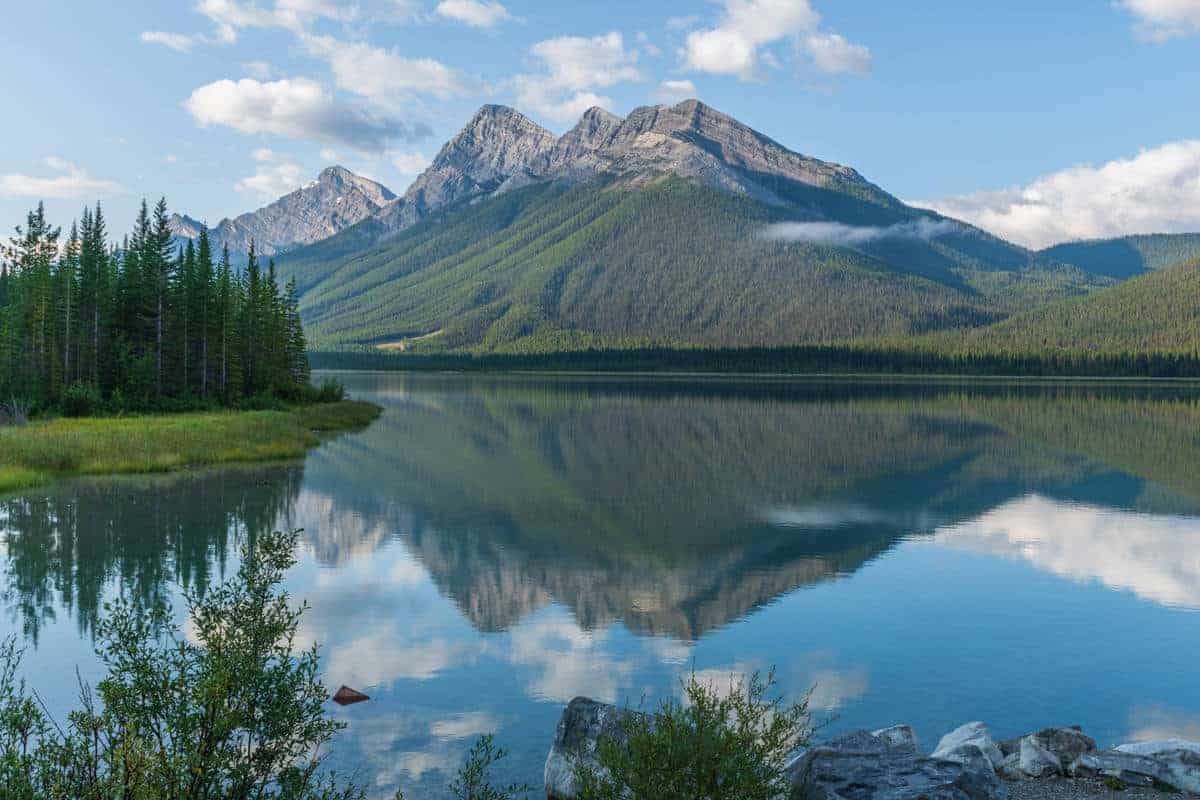
Create depth in your photo by adding foreground elements.
Adding a bit of foreground also provides depth to the scene. A photo with layers (foreground, midground and background) will add a 3-dimensional effect, instead of looking flat.
YOUR PHOTOGRAPHY JOURNEY FACEBOOK GROUP
This is the group for you if…
• You have a camera
• You like taking pictures
• You want to improve your photography skills
Why a Tripod is Important for Reflection Photography
Use a sturdy tripod to capture sharp, crisp images. A tripod reduces camera movement that inevitable happens when you hand hold your camera.
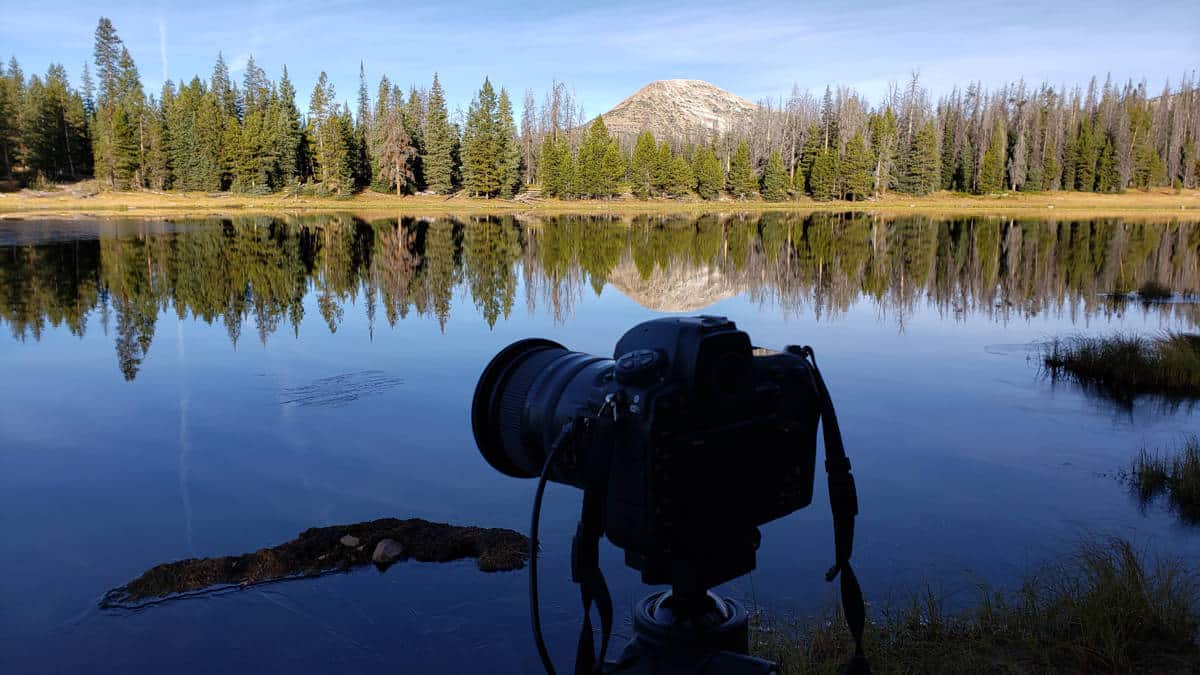
Use a tripod to reduce camera shake when photographing reflections.
You don’t want the tack sharp reflection you see in the water to have any bit of blur due to camera shake.
We use a remote shutter release along with the tripod to limit further physical contact when taking the shot and maximize sharpness. You can also use the timer on your camera to do this.
CLICK TO PIN FOR LATER

The post How to Photograph Reflections to Create Stunning Images appeared first on PhotoJeepers.
from PhotoJeepers https://ift.tt/2TTIDEk
via IFTTT
